jueves, 18 de mayo de 2017

Golden number. Where are you?

Title: Golden ratio. Where are you?

Abstract:
The aim of this project is to study one of the most wellknown irrational numbers, the Golden number. Students will discover this number in their bodies, in real world and arts, by sharing data and making statistics, sharing photos,...
Students will measure their bodies (total height and height navel-feet), they'll share these numbers in Google Drive and then they'll calculate means of several quotients, in teams-2 members of each country-, they'll compare these mean with Golden number and study if there are differences between countries, group aof ages or gender. Then, each team will write an entry in the project blog explaining their conclusions.
Another activity will be to share in padles images showing that Golden number is in real world, then using a survey they'll decide which images are the best and working with Geogebra, they will show how Golden ratio appears in these images.
Finally they will wirte entries in the project blog

General details:
  • Age of students:15-16
  • Number of pupils: about 20 students per country
  • Subject involved: Mathematics
Objectives:
  • To study real numbers (Standard 2.1.1 see curriculum)
  • To make statistics using real data (standards 5.3.1,5.4.1,5.4.2,5.4.3 see curriculum)
  • To use ITC as Google Drive, Geogebra ,blogger and spreadsheets (standards 1.8.1, 1.8.2,1,8.3, 1.9.1, 1.9.3 see curriculum).

Key Competences involved:

  • 2.Communicating in a foreign language:.
  • 3.Mathematical, scientific and technological competence.
  • 4.Digital competence.
  • 5.Learning to learn
  • 6.Social and civic competences 
ITC:
  • Google Drive
  • Blogger
  • Geogebra
  • Padlet.
  • Excel
  • Youtube
Work process:
Communication among partners
  • Teachers: They will use the internal mail and twinspace in order to determine deadlines, reach agreements about students material and so on.
  • Students: Will use chat and forum in twinspace for writing communication, As they are sharing a spreadsheet inDrive they also will communicate using this tool.
Organization of student's work:

Different kinds of activities
  • Knowing each other activities.
  • Designing  a logo
  • Working with Golden number
Knowing each other activities:
  • A chinese portrait. Tools in twinspace: Forum and images

    • Ecah student will write a post in a forum saying “ if a were a …. I’d be a ….”
    • Later Teachers upload photos of students showing one object that can help to identify them.
    • Using the forum students to identify their partners
  • How we make maths a school. Tool in twinspace: Videos
    • Each country will upload one or more videos showing different activities about maths in their schools
Designing a logo  

Tools Padlet , Geogebra and Google Docs
  • ·        First each student  using Padlet post a photo that represents Golden number in any way
  • ·        Second using Google Docs a contest is organized in order to determine wich image is a best representation of the Golden number.
  • ·        Using Geogebra and working in international teams, students design the logo with the winner image
  • ·        Again using Google Doc the logo is decided


Working with Golden number:

Sharing and working with data: Google Drive
  • The team of teachers create a spreadsheet in Google Drive.
  •  The headlines of the spreadsheet are:


Country
Gender
Age
Total height
Height navel-sole of feet


  • Then, teachers share this in Google drive with all the students.
  • Each student fills a row, so that finally there will be lots of real data for making statistics.
  • Then, teachers organize teams so that each team has at least one member from each country.
  • These teams will make statistics together, one team will work with all the data, other will separate separate data by countries ,another by gender ,... and each team will calculate means and make comparisons with Golden number.
  • If necessary students will use the forum when they have to coordinate the common work or to assign different tasks to different students
  • Once each team has made the calculations and graphs they will share them in the blog of the project.
  • Using the forum, they have to reach an agreement about the differences between countries, genders etc
Sharing the results

·        Each team writes an entry in the common blog sharing their result. This activity is interesting because we can observe the differences between gender, ages and countries

Final result:
A blog with all the conclusions, images, spreadsheets and Geogebra


domingo, 14 de mayo de 2017

#twinmooc Collaborative activity

Here is my collaborative activity,

As I wrote in my draft the objectives of this project are:
  • To study real numbers , in particular Golden number ,a wellknown irrational number
  • To make statistics using real data 
  • To use ITC as Google Drive, Geogebra ,blogger and spreadsheets 

  1. Aim of the activity: To share real data and to calculate Golden Number in human body
  2. ITC involved: Google Drive, Excel, forum in twinspace  and blogger
ACTIVITY

  • The team of teachers create a spreadsheet in Google Drive.
  •  The headlines of the spreadsheet are:


Country
Gender
Age
Total height
Height navel-sole of feet


  • Then, teachers share this in Google drive with all the students.
  • Each student fills a row, so that finally there will be lots of real data for making statistics.
  • Then, teachers organize teams so that each team has at least one member from each country.
  • These teams will make statistics together, one team will work with all the data, other will separate separate data by countries ,another by gender ,... and each team will calculate means and make comparisons with Golden number.
  • If necessary students will use the forum when they have to coordinate the common work or to assign different tasks to different students
  • Once each team has made the calculations and graphs they will share them in the blog of the project.
  • Using the forum, they have to reach an agreement about the differences between countries, genders etc

lunes, 8 de mayo de 2017

#twinmooc Project draft

Title: Golden ratio. Where are you?


Abstract

The aim of this project is to study one of the most wellknown irrational numbers, the Golden number. Students will discover this number in their bodies, in real world and arts, by sharing data and making statistics, sharing photos,...
Students will measure their bodies (total height and height navel-feet), they'll share these numbers in Google Drive and then they'll calculate means of several quotients, in teams-2 members of each country-, they'll compare these mean with Golden number and study if there are differences between countries, group aof ages or gender. Then, each team will write an entry in the project blog explaining their conclusions.
Another activity will be to share in padles images showing that Golden number is in real world, then using a survey they'll decide which images are the best and working with Geogebra, they will show how Golden ratio appears in these images.
Finally they will wirte entries in the project blog

General details:

  • Age of students:15-16
  • Number of pupils: about 20 students per country
  • Subject involved: Mathematics

Objectives:

  • To study real numbers (Standard 2.1.1 see curriculum)
  • To make statistics using real data (standards 5.3.1,5.4.1,5.4.2,5.4.3 see curriculum)
  • To use ITC as Google Drive, Geogebra ,blogger and spreadsheets (standards 1.8.1, 1.8.2,1,8.3, 1.9.1, 1.9.3 see curriculum).

Key Competences involved:


  • 2.Communicating in a foreign language:.
  • 3.Mathematical, scientific and technological competence.
  • 4.Digital competence.
  • 5.Learning to learn
  • 6.Social and civic competences 

ITC:

  • Google Drive
  • Blogger
  • Geogebra
  • Padlet.
  • Excel
  • Youtube

Work process:

Communication among partners

  • Teachers: They will use the internal mail and twinspace in order to determine deadlines, reach agreements about students material and so on.
  • Students: Will use chat and forum in twinspace.

Organization of student's work

Different kinds of activities
  • Knowing each other activities.
  • Designing  a logo
  • Working with Golden number
Knowing each other activities:
  • A chinese portrait. Tools in twinspace: Forum and images
  • How we make maths a school. Tool in twinspace: Videos
Designing a logo Tools in twinspace: Forum and images

Working with Golden number:
  • Sharing data: Google Drive
  • Working with data: Excel
  • Sharing results:blogger
  • Sharing images: Padlet
  • Voting images: Google docs surveys
  • Drawing Golden ratio Geogebra

Final result:

A blog with all the conclusions, images, spreadsheets and Geogebra


jueves, 27 de abril de 2017

#Twinmooc second week

This week I have beeen thinking about my teaching and what I can improve.
I shared two different things to improve.
As a  maths teacher in a bilingual section I'd like my students speak English instead Spanish, but I don't know how to do this despite of the fact that I'm always speak English.
Another aspect I'd like to change is to be more patient with my students (not because I'm angry with them),waht I mean is that when we are working in a class project, for example this week we are calculating heights using trigonometry, shadows, similatiry, mirrors,... I sometimes don't give them enough time beacause I'm afraid their wasting time, but it's likely that they need more time than the one I think .
I also have shared different links to several projects I find specially atractive like

martes, 28 de febrero de 2017

Modeling real world with maths

These are a couple of videos of two students of mine about modeling real world using maths
The author of the first one is Olaf Chwolka 1º bachiller A

The author of the second one is Luis Campillo 1º bachiller A


martes, 8 de noviembre de 2016

viernes, 28 de octubre de 2016

Equations (AICLE unit)

Course: 4 ESO  Matemáticas académicas

Introduction:
This lesson is about equations, system of equations and inequalities.A project called "Three squirrels and a pile of nuts" is included as a final task. You also can find the objectives, the activities and several rubrics for assessment.

Learning outcomes:
  1. ü  To factorize polynomials in order to solve polynomial equations whose degree is greater than two
  2. ü  To express in algebraic language a real situation, to study this situation and to solve the problem with the appropriate algebraic tool: equation, inequality, system of equations… 
  3. To give an interpretation of the results in terms of the considered problem.
  4. To apply these concepts in a class project.
  5. To use the appropiate technological tool such as spreadsheet, text procesor.
  6. To write a report using mathematical lenguage.
  7. To know the corresponding vocabulary in English

Evaluation criteria:
  1. ü  To use correctly algebraic language
  2. ü  To compute algebraic calculations
  3. ü  To know and apply algebraic properties.
  4. ü  To represent and analyze situations involving mathematics using inequalities, equations and system of equations.
  5. ü   To apply equations, system of equations and inequalities in order to solve mathematical and real problems.
Subject content:
  1. ü  Polynomial equations, equations with the unknown in denominator (algebraic  fractions) and equations with the unknown inside a radical (irrational equations).
  2. ü  Simultaneous linear equations (systems of linear equations)
  3. ü  Simultaneous non linear equations (systems of non linear equations).
  4. ü  Linear and quadratic inequalities. Numerical and graphical solutions.
  5. ü  System of inequalities (one variable)
  6. ü  The spreadsheet
Vocabulary

BICS
CALP
Nouns
Squirrel, pile, nut, report, summary, height, weight, length, width
Equation, unknown, variable, solution, interval, substitution, elimination, root, line, intersection, algebra, algebraic fraction, LCM, common denominator, union, intersection, sign, coefficient, term, degree, spreadsheet.
Verbs
To check,  to belong, to flip, to calculate, to isolate, to remain, to leave, to weigh
To solve, to square, to reduce(common denominator), to extract (common factor), to pass(through)
Adjetives
Open, closed, high, long, wide
Linear, quadratic, biquadratic, radical irrational, algebraic, polynomial, cubic, leading(coefficient), independent(term), squared 
Comparative  Greater than, less than, equal to, greater than or equal to,…Students will be these structures when they are solving inequalities .
Equal Student have to know how to use this word as a verb and as a noun. For example  the expression x=3 can be read in two different way.   
  •      X is equal to 3 (here equal is a noun)
  •         X equals 3 (and now is a verb)

Derivative words
High/height vs weigh/weight It is necessary to pay attention to these pairs of words High is an adjective and height is a noun but to weigh is a verb and weight is a noun. The students are usually confused about the pronunciation and tend to pronounce height and weight in the same form. These words are very frequent in words problems.
Long/length
Wide/width The pronunciation is different again, and student usually are mistaken


Activities:


In each type of equation there are different activities, active watching, watching, vocabulary exercises, application exercises and word problems

Quadratic equation:


  1. Interactive watching http://learningapps.org/display?v=pfkwrq95c16
  2. Video http://www.youtube.com/watch?v=LSANfj3ozSk
  3. Vocabulary  activity. Complete the following sentences 
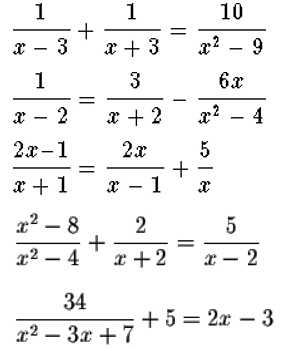
  4. Application exercises:
  5. Word problems

  • Translate each English phrase into an algebraic expression. Let x stand for the number:
a)      twice the number
b)      nine more than the number
c)      the number multiplied by seven
d)      nine divided into the number
e)       the number divided by nine
f)       the number increased by fourteen
g)       six decreased by the number
h)      a number less 9
i)       nine less than a number
j)       nine less a number
k)      nine is less than a number


  •  A ladder is resting against a wall. The top of the ladder touches the wall at a height of 15 feet. Find the distance from the wall to the bottom of the ladder if the length of the ladder is one foot more than twice its distance from the wall
  •  The longest leg of a right triangle is one meter longer than the shortest leg. The hypotenuse is one meter shorter than twice the shortest leg. Find the length of the shortest leg of the triangle.
  •  The length of a rectangle is 6 inches more than its width. The area of the rectangle is 91 square inches. Find the dimensions of the rectangle.
  •  The product of two consecutive odd integers is 1 less than four times their sum. Find the two integers
  • The length of a rectangle is 2 times its width. The area of the rectangle is 72 square inches. Find the dimensions of the rectangle.
  • The length of a rectangle exceeds its width by 3 inches. The area of the  rectangle is 70 square inches, find its dimensions.
  • The product of two consecutive integers is 56. Find the integers.
  •  The product of two consecutive odd integers is 99. Find the integers.
  • Find two consecutive even integers such that the square of the smallest is 10 more than the largest.
  • The product of two consecutive odd integers is 1 less than twice their sum. Find the integers.
  • The medium side of a right triangle is 7 more than the shortest side. The longest side is 7 less than 3 times the shortest side. Find the length of the shortest side of the triangle.

Radical equations
  1. Interactive watching http://learningapps.org/display?v=p1powy2pn16
  2. Vocabulary. 

  3. Application exercises

Rational equations:
  1. Interactive watching http://learningapps.org/display?v=p9my5mvpj16
  2. Vocabulary 
  3. Application exercises 
Polynomial equations
  1. To watch the following video http://www.youtube.com/watch?v=g7_llQnLepA&feature=channel
  2. Vocabulary . Complete the sentences: To solve a polynomial equation first _____________ the polynomial and then ____________ for x each _______________
  3. To solve the exercises
Vocabulary exercise
Match each equation with its name
Systems of linear and non-linear equations
  1. Watching activities 
  1. Word problems
  • Find the ages of two people knowing that ten years ago, the age of the first person was four times the age of the second person, and in twenty years, the age of the first person will be double the age of the second person.
  •   A group of students have paid € 144 for 3 tickets in the shade and 6 tickets in the sun to a bull fight. Another group paid € 66 for 2 tickets in the shade and 2 tickets in the sun. Calculate the price of each ticket.
  • Michael buys two bags of chips and three boxes of pretzels for $5.13. He then buys another bag of chips and two more boxes of pretzels for $3.09. Find the cost of each bag of chips and each box of pretzels.
  •  There are 420 students in a high school. Forty-two percent of “ESO” and 52% of “bachillerato” are girls, which means 196 in total. Calculate the amount of students in ESO and bachillerato.
  • A total of 925 tickets were sold for $5,925. If adult tickets cost $7.50, and children's tickets cost $3.00, how many tickets of each kind were sold? 
  • The perimeter of a rectangle is 26 cm and its surface is 40 cm2. Calculate its dimensions.
  •  The sum of two numbers is 10 and their product is 24. Calculate both numbers. 
  • Find two consecutive odd numbers whose product is 49 times the square of the smaller.
  • Calculate the surface of a square knowing that the diagonal length exceeds 5 cm its side length.
Inequalities
  1. Watching activities http://www.youtube.com/watch?v=1wPJfzStBqE&feature=related
  2. Word problems     Solve the following word problems by :
    a.     Clearly identifying your variables
    b.     Setting up an inequality
    c.      Solving the inequality
    d.     Stating your answer.

    a) Tom earned 400€ and 550€ in interest the last 2 years. How much interest must he earn this year so that his average earnings over the three year period are more than 600€?

    c) Robert makes $3.50 per hour working at a convenience store. If he gets a bonus of $25 this week, how many hours must he work to make at least $165?

    d) The low temperatures for the last two days were 28° and 15° . What must the low temperature for the next day be in order for the average temperature for the 3-day period to be less than 19°?

      Project

THREE SQUIRRELS AND A PILE OF NUTS.

THE PROBLEM.
Three squirrels, Steve, Keith and Benjamin, have spent all day collecting nuts. At the end of the day they are very tired and go to bed.
During the night, Steve wakes up and eats a nut. He then decides to take one third of the remaining pile and hides it before going back to sleep. Keith then wakes up. He too is hungry, so eats a nut. He also takes one third of the remaining pile and hides it before going back to sleep. Finally, Benjamin wakes up, eats a nut and hides a third of the remaining pile.
In the morning, all of the squirrels share the remaining nuts equally between them and each goes off with two more nuts. Each squirrel then eats all the nuts he now has.
How many nuts has Steve eaten in total?
HOW TO SOLVE IT.
You have three different strategies to solve the problem. You have to work in a team and you must develop completely the three strategies and write a document explaining the solution step by step.
STRATEGY 1.

WHAT TO DO: With this strategy, you'll be solving the problem the way a squirrel would - one nut at a time!
1. Count out the number of nuts your group would like to start with (not necessarily all you have). Put these in your starter pile.
2. Make one member of your team Squirrel 1, and have him or her tackle the pile of nuts the way the first squirrel in the story did.
Warning: No fractions of nuts allowed! Let Squirrel 1 take several tries until she or he ends up with whole amounts after each step. Record these numbers.
3. Now the teammate who's playing Squirrel 2 should work through the steps. Again, no fractions - so both Squirrel 1 and 2 may need to go back and adjust their piles. Record the numbers that work.
4. Finally, Squirrel 3 should take his or her turn. Adjust as needed, and record the results in your document.
5. When Squirrel 3 is through, divide the nuts that are left. If the pile doesn't divide by three, adjust all the way back through the problem. Record your tries and your final answers.
6. From all your notes, write several sentences (with pictures if you'd like) describing the steps and numbers that finally gave you the right answer.

STRATEGY 2.

WHAT TO DO: In this step, you'll be setting up a spreadsheet that will let you try out various combinations of numbers to solve the problem.
1. Label your rows for Squirrel 1, Squirrel 2, and Squirrel 3. Label your columns "No. of nuts in pile," "No. of nuts after s/he eats 1," and "No. of nuts s/he leaves behind."

A
B
C
D
E


No. of nuts in pile
No.of nuts after s/he eats 1
Of nuts s/he leaves behind

Squirrel 1


Squirrel  2


Squirrel 3


2. Now, figure out formulas for all the cells that will let you plug in and test out numbers. Remember to make each cell relative to the others, so that a number you plug into one cell's formula will affect the rest. Here are a few hints:
The formula in cell C2 should be =B2-1, because the squirrel eats one nut from the pile in B2.
The formula for D2 is =(C2/3)*2, because Squirrel 1 leaves two-thirds of the pile behind.
The formula for B3 is =D2, because Squirrel 2 finds the pile the way Squirrel 1 leaves it.
3. Once all your formulas are in place, test out your spreadsheet by plugging a number into B2. You may end up with a lot of weird-looking fractions - and you know these squirrels aren't going to settle for anything less than whole nuts! Keep trying numbers until you find one that gives you whole numbers throughout. What patterns do you see?
4.- Include your spreadsheet in the document twice, once showing the formulas and once with your whole-number solution in place.
STRATEGY 3(algebra power).

WHAT TO DO: With this problem-solving strategy, you'll be setting up an algebra equation to solve.
1. Open the Excel worksheet used for Strategy 2, leave the column and row headings. Now you have plenty of room to create a table for defining your variables.
2. The variables you most need to solve for are:
x= nuts in original pile
y= number of nuts each squirrel gets in the end.
Record these at the bottom of your worksheet.

A
B
C
D


No. of nuts in pile
No.of nuts after s/he eats 1
Of nuts s/he leaves behind
Squirrel 1


Squirrel  2


Squirrel 3


x= nuts in original pile


y= number of nuts each squirrel gets in the end


3. Here are some hints: Put in x as Squirrel 1's "No. of nuts in pile."
When it comes to solving for y, remember that it is one-third of however many nuts are left in the end, so y=1/3 (last entry in table).
4. After you fill in your table, put together an equation. You can type this in your worksheet below your table. Show steps for simplifying the equation. Then test it out with several numbers.
5. Make sure your worksheet shows all the steps you followed to write and solve the equation.


THE FINAL REPORT
Your final report must include
1.      A cover (make a beautiful one, including photos or drawing a picture)
·        Title
·        Names of the members of the group and their degree of involvement in the different tasks.
·        Date
2.      Index
3.      Objectives
·        The main objective of this project is to ___________________________
·        Other objectives are___________________________________________ and ____________________________________________________________
4.      Description and explanation of the three strategies
·        Strategy 1:
ü Description: In this strategy, each member of the group behaves as a ______________, then____________________________
ü Results: We think that the number of nuts is______
·        Strategy2:
ü Description: In this strategy, we have used a ______________, and then____________________________
ü Results: We think that the number of nuts is______
·        Strategy2:
ü Description: In this strategy, we have used ______________, and then____________________________
ü Results: We think that the number of nuts is______
5.      Resources
6.      Conclusion and personal opinion:
·        Combining the ______________ strategies, we think that the number of nuts can be ___________________ because ______________________________
·        I like or dislike this project because __________________________________
·        The easiest strategy was ___________ because_________________________
·        The most difficult strategy was______because_________________________


Assessment


·        Interactive activities  and quizzes

            http://quiz.econ.usyd.edu.au/mathquiz/sim-eqns/quiz1.php

Rubrics
1.      Self-assessment:
Students will use the following table:
SELF ASSESSMENT
Tick the following items when you are sure that you know them

Well known
Medium
Don’t know
Basic vocabulary


To solve complete quadratic equations


To solve incomplete quadratic equations


To solve biquadratic equation 


To solve radical equations


To solve rational equations


To solve polynomials equations


To translate English into algebraic language


To solve linear system of equations by substitution


To solve linear system of equations by elimination


To solve linear system of equations by “igualación”


To solve linear system of equations graphically


To solve non linear system of equations


To solve linear inequalities


To solve quadratic inequalities


To use scientific calculator


To use geogebra (CAS)


1.      Project ‘three squirrel and a pile of nuts’  (adapted from eduteka.org)
The project will be assess  using the following rubric


Category
3
2
1
0
1
Personal work


Trabaja de forma de adecuada
No trabaja nada
2
deadlines


Cumple los plazos
Incumple los plazos
3
REPORT
3.1
Format


Incluye portada, índice, objetivos, trabajo desarrollado y conclusiones
Falta algún apartado
3.2
Vocabulary

Escrito en inglés sin grandes errores
Escrito en inglés con errores
Escrito en castellano
4
COMPREHENSION


Lee el texto y entiende la tarea
Necesita ayuda para comprender la tarea
5
STRATEGY 1
5.1
Finding a solution

Más de una
Una
No encuentra
5.2
Making their own estrategy


No
6
STRATEGY 2
6.1
Format of the spreadsheet

Claro y buena presentación
Normal
No hace o incomprensible
6.2
Spreadsheet

Correcta y sin ayuda
Correcta con ayuda
No hace o incorrecta
6.3
Finding solutions with the spreadsheet

Encuentra varias
Comprueba las que tenía
No encuentra
7
STRATEGY 3
7.1
Equation

Correcta sin ayuda
Correcta sin ayuda
Incorrecta o no encuentra

Finding the set of solutions

Correcta sin ayuda
Correcta sin ayuda
Incorrecta o no encuentra
8
CONCLUSSION
8.1
Objetives


Describe
No describe
8.2
Describe estrategies
Describe 3
Describe 2
Describe 1
No describe
8.3
Explain strategies
Explica 3
Explica 2
Explica 1
No explica
8.4
Final conclussion


Hace
No hace